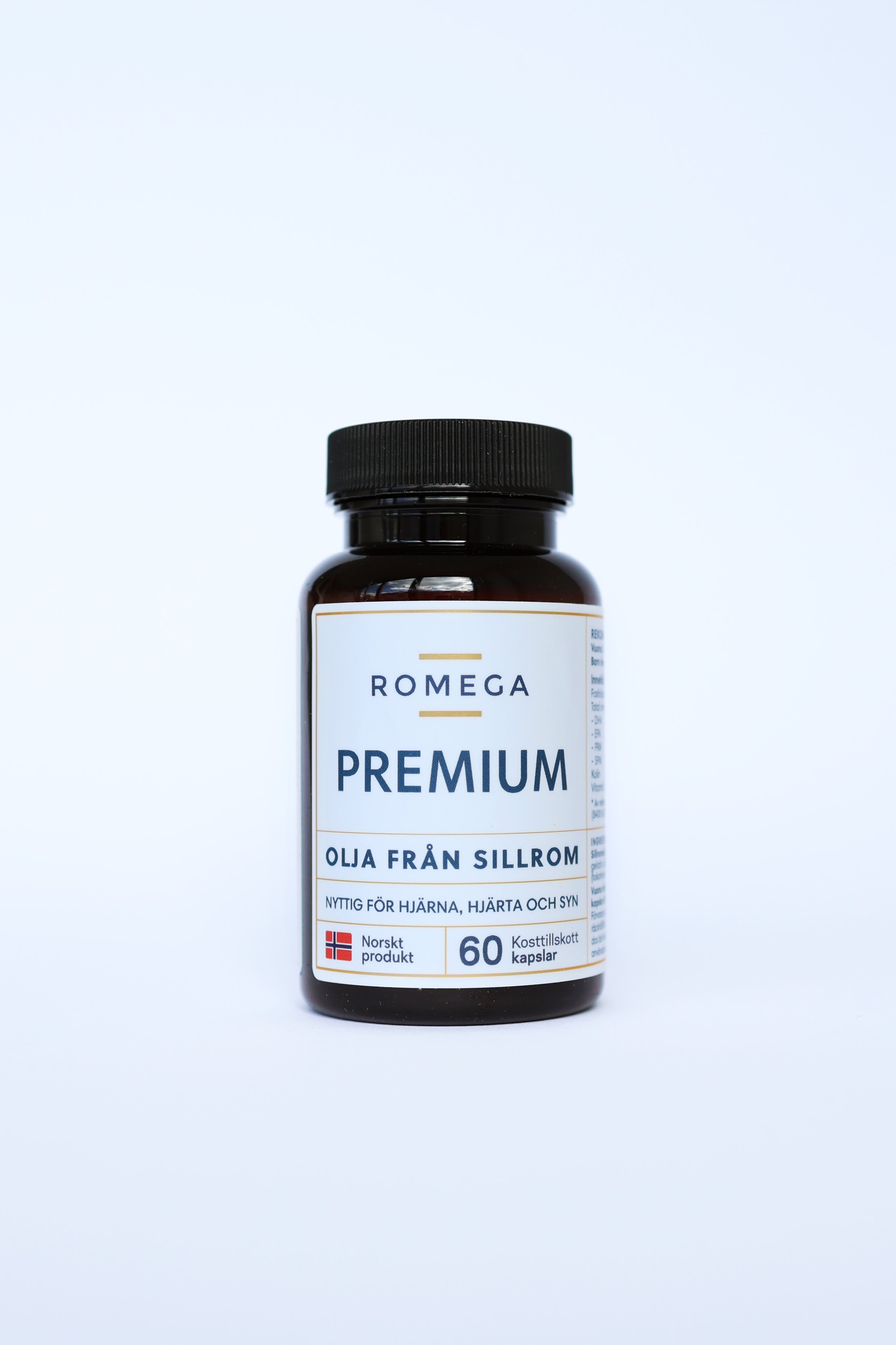
We at Arctic Bioscience (formerly Arctic Nutrition) are proud to call Romega one of Norway's most sustainable sources of omega-3. Being sustainable means contributing to a development that meets the needs of today without destroying the opportunities for future generations to meet their needs. Sustainability as a concept can sometimes be perceived as "tired", and many use it without a sufficient basis. In practice, any company can say that they are sustainable, without this necessarily being true.
As a user of Romega, you can be sure that our product is sustainable. That's why we will take you step by step through the journey to Romega, as one of Norway's most sustainable sources of omega-3.
Herring from sustainable fisheries
We have a good collaboration with local fisheries, which deliver herring to the fish reception at Pelagia Liavåg. All fishing boats that deliver herring to the reception are certified by MSC, the Marine Stewardship Council, an international non-profit organization that was formed to ensure sustainable fisheries. 1
The herring stock is large and well regulated.
Until the 1970s, herring was a staple on Norwegian tables. During the same period, overfishing led to the herring’s tragic near-extinction. 2 Today, Norwegian fishing industries must adhere to certain quotas to ensure that there are always enough fish in the sea. These quotas determine how many tonnes of fish can be taken from certain parts of the spawning grounds.
The year class composition is a factor that determines the size of the quotas, as it is important that the composition is always stable. If there is a bad year class one year, the quota will decrease, and if there is a good year class, the quota will increase. This is determined based on the age composition of the specific stock.
"If you have a large population, where the majority of the fish are mature for spawning, the quota will be lower. If there is a population with many mature fish, the quota will be larger. That's how it works," says entrepreneur Hogne Hallaråker.
In addition, management is based on other fish species. For example, cod eat other fish species, including herring. If there is a large cod population one year, this will naturally affect the herring stock.
"Therefore, it is important that all species are managed in conjunction with each other. That is, that herring and mackerel are managed together with other whitefish species, such as cod and haddock," says Hogne.
Implementing such fisheries management ensures that future fisheries can operate in the same way as they do today. The Norwegian spring-spawning herring is well monitored, precisely to ensure a large and sustainable population.
Huge shoals of herring along the Norwegian coast
Herring move in shoals. During the spawning season, they gather in large numbers in a limited area. The fact that herring move in huge shoals makes them easily accessible for fishing, and therefore less fuel is used in fishing. Herring production has a very low carbon footprint and is actually considered one of the most environmentally friendly species in food production. 3
Today, there are huge shoals of herring along the Norwegian coast, and herring is potentially the largest fish stock in the Atlantic. According to the Institute of Marine Research, a large shoal of herring can weigh as much as the entire population of Norway. In 2006, the Norwegian spring-spawning herring stock alone was over 10 million tonnes.
Low trophic level
Herring is directly sustainable because it is a species that lives at a low trophic level. This means that herring is not a predatory fish that eats other fish species, but rather that it eats plankton. Herring is therefore low on the food chain, and the lower the trophic level, the less environmental load accumulates in the species.
"The further down the food chain you are, the more sustainable it is to exploit the species in question. Herring eat plankton, not other fish – they are herbivores. This is better than, for example, cod, which are cannibals."
The world's best raw materials
The Norwegian spring-spawning herring is fished to make fillets that are sold abroad. When the fish is filleted, all parts of the fish are sorted for different purposes. Previously, herring roe has been unused or used as animal feed.
"When the roe comes out with the entrails, we remove it from the rest so that we can use it further. The rest of the entrails go into animal feed."
Herring roe is therefore a residual material that we have utilized in a new way. This extends the herring food chain and leads to better utilization of marine resources, as the herring is used to a greater extent in its entirety.
Herring is a complete raw material and is packed with important vitamins and nutrients. Herring roe contains large amounts of the important omega-3 fatty acids DHA and EPA. Extracting fat from roe is a very demanding process. At Arctic Bioscience, we have researched methods to extract these nutrients. Innovative technology has been crucial in this process, but how this is carried out in detail is our own big secret.
Local value creation
Arctic Bioscience is located in Ørsta in Sunnmøre – a town with a long tradition of herring fishing. For us, it is also about taking care of the local fishing along the coast and in this way helping to preserve an important coastal heritage. At the same time, it is quite unusual to have such a research environment of international caliber in such a small town as Ørsta.
"We are a lipid development company specializing in lipid technology and processing. This is completely new in our field."
Romega production has low energy consumption throughout the entire value chain before export. We are also working on developing a new factory at the headquarters in Ørsta, which will give us full control over the entire production chain. The herring caught in the sea off the Møre coast will have a short journey to the finished product when the new factory is ready.
The local factory will create more jobs, a fully Norwegian value chain for a sustainable and locally sourced dietary supplement and at the same time contribute to a positive boost for the Norwegian health industry. 4

One of Norway's most sustainable sources of omega-3
Future success for the Norwegian biomarine industry is predicted to be linked to a greater focus on optimal use of sustainable marine residual raw materials. 5 This mindset is the very foundation of Arctic Bioscience.
Focusing on sustainability is not just about being kind to the environment, but also about thinking smartly and long-term. By optimizing the use of Norwegian spring-spawning herring, we contribute to the emergence of a future-oriented industry. We are proud to be able to offer a product that benefits both public health and the biomarine industry, and that in the process protects and builds on environmental considerations.
Operating sustainably is a social responsibility, and we take that seriously.
-
https://www.msc.org/no/hva-vi-gjoer/vaar-tilnaerming/hva-er-baerekraftig-fiske
-
https://www.framtiden.no/gronne-tips/mat/dette-er-verdens-mest-barekraftige-fiskemat.html
-
https://www.framtiden.no/gronne-tips/mat/sjekk-hvilken-mat-som-er-best-for-miljoet.html
-
https://www.lmi.no/2020/03/27/arctic-nutrition-bygger-ny-farmasoytisk-fabrikk-i-orsta/