It is called the silver of the sea; a metaphorical symbol of the enormous importance herring has had for the Norwegian economy and for people who have lived along the coast.
It is called the silver of the sea; a metaphorical symbol of the enormous importance herring has had for the Norwegian economy and for people who have lived along the coast. Herring is still an important resource in Norway, and now we know even more about it. Did you know that herring is considered the world's most sustainable fish feed? Or that it is also one of the world's most environmentally friendly species in food production? 1,2
Herring is sustainable
Thanks to good and sustainable quota regulations, herring is still an important part of the maritime industry in Norway. The herring stock is managed so that future generations will also be able to benefit from this fantastic fish. Today, herring in food production has a very low environmental impact.

One of the world's most sustainable species in food production
There are several reasons why herring is considered one of the world's most sustainable species in food production. In numerical terms, we can primarily look at the greenhouse gas emissions from herring fishing, as the production of herring actually emits very little carbon dioxide.
Minimal greenhouse gas emissions
Greenhouse gas calculations use a unit called CO2 equivalents. This unit corresponds to the global warming effect that the emission of 1000 kg of CO2 will have over 100 years. 3
Herring emits 0.9 CO2 equivalents per kilogram of product produced. Compared to cattle, which emits 22.7 CO2 equivalents per kilogram of product produced. Among other shellfish, wild-caught cod is estimated at 2.8 CO2 equivalents per kilogram and farmed salmon at 5.3 CO2 equivalents per kilogram. Of all food production in the world, herring production is one of those that emits the least carbon dioxide. 1
Sustainable herring fishing
For some it may sound a little strange. It is common knowledge to many that fishing cannot always be considered a sustainable industry.
For example, the maritime industry in Norway has recently been criticized for its extensive use of bottom trawling, which contributes significantly to increased CO2 emissions. 5 The seabed is one of the world’s largest carbon reservoirs, and bottom trawling releases large amounts of carbon from the seabed. The aquaculture industry has also come under scrutiny on this issue.
For wild-caught fish, fuel and cooling during fishing generally contribute the most to greenhouse gas emissions. Herring fishing, on the other hand, has a small carbon footprint.
Why is that?
Herring is a migratory species in the sea. In winter, the Norwegian spring-spawning herring migrates in shoals from the Barents Sea to the spawning grounds along the Møre coast. This is the most important spawning area for the Norwegian spring-spawning herring. 4
By the time the herring reach the Møre coast, the shoals have grown enormously large. A single shoal can be several kilometers long and often a kilometer wide. 4
Shallow waters at Møre – a perfect scenario for fishermen
Along the Møre coast we find shallow waters that push the enormous shoals of herring to the surface. None of them want to be on the edge – then they are in danger of being eaten by both whales and birds. The herring clump together, and the sea begins to "boil" as a result of the currents that arise. The stimulation becomes more intense the shallower the water. This is a perfect scenario for the fishing boats that are ready with their herring nets on the surface. 4

Herring fishing is often a quick process
The boats usually use a line, which they throw after the enormous shoal. A line is a type of fishing gear, a net that is thrown over a shoal, pulled together and catches parts of the shoal of herring. 4
The advantage of herring fishing is precisely the enormously large shoals that the herring move in. This makes them easily accessible for fishing, and the fishing boats do not have to travel far or be out for long before the day's catch is secured.
Short-lived omega-3
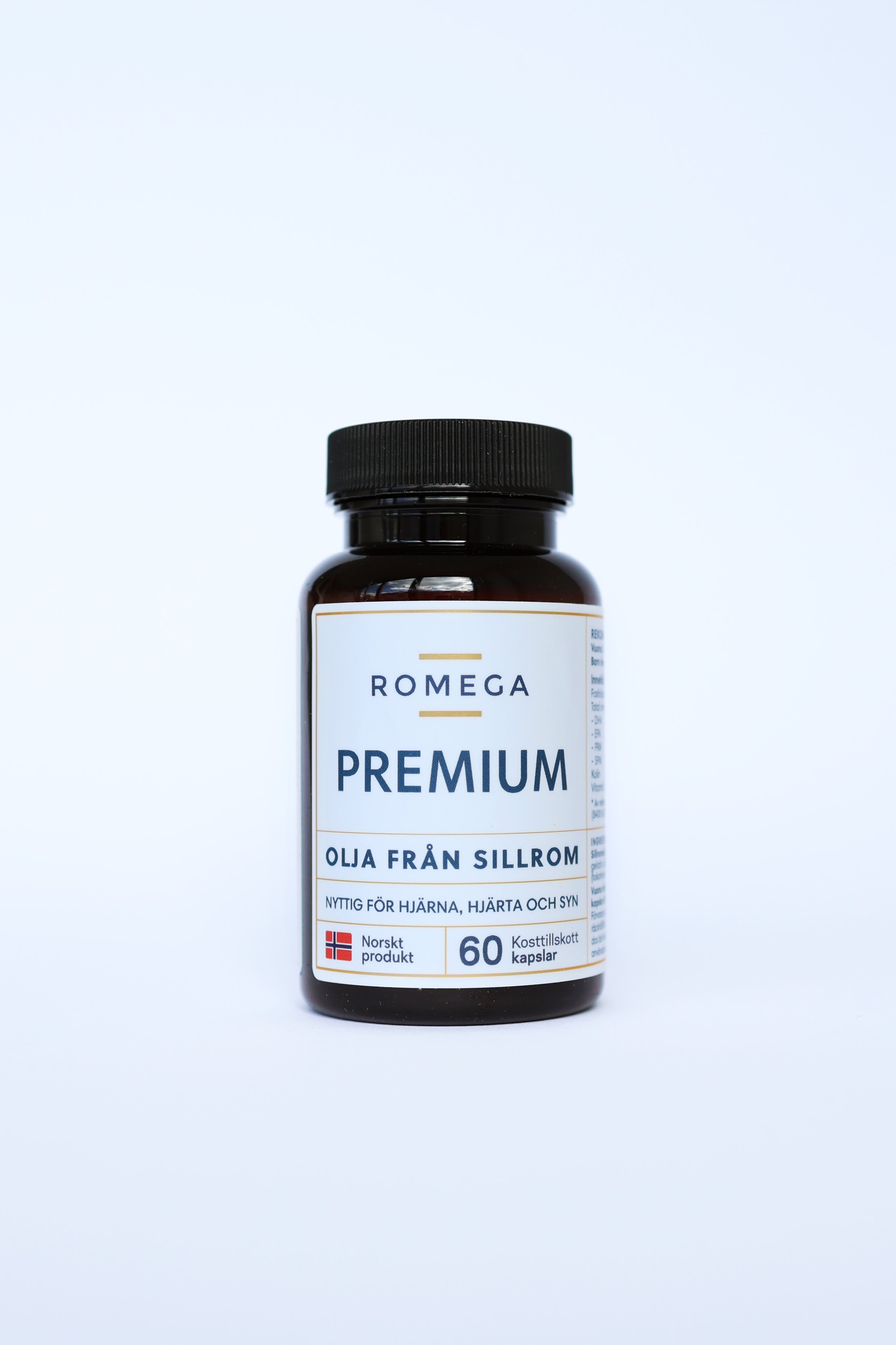
Only a fraction of the shoal is taken from the sea and transported to the fish receptions for further processing. The herring stock is well managed, and fishing takes place under strict quota rules. It is at the receptions that we separate the immature roe from the herring fillet, and the roe is further processed at Romega. Here we are talking about short-lived omega-3.
You can take Romega with a clear conscience – a good choice for yourself and for the future.
https://www.youtube.com/watch?v=TjhFHpHaaaA
References
1. Lindahl, H. (2020). Check which food is best for the environment at vriden.no. Retrieved 16.04.21 from https://www.framtiden.no/gronne-tips/mat/sjekk-hvilken-mat-som-er-best-for-miljoet.html
2. Ekern, Y. (2019). This is the world's most sustainable fish food from the future.no. Retrieved 16.04.21 from https://www.framtiden.no/gronne-tips/mat/dette-er-verdens-mest-barekraftige-fiskemat.html
3. Olerud, K. & Lahn, B. (2020). CO2 equivalents in the Great Norwegian Encyclopedia on snl.no. Retrieved June 21, 2020 from https://snl.no/CO2-ekvääniter
4. NRK (2011). The Silver of the Sea. Retrieved from https://tv.nrk.no/serie/ut-i-naturen/2012/DVNA50000510
5. Sala, E., Mayorga, J., Bradley, D. et al (2021). Protecting the global ocean for biodiversity, food and climate. Nature 592, 397 402. https://doi.org/10.1038/s41586-021-03371-z