The body is made up of many different types of cells. A very well-known example of an important cell type is red blood cells, which look like little grains of wheat that someone has squeezed together in the middle.
Did you know that the human body is made up of over 30 trillion cells? 1
The body is made up of many different types of cells. A very well-known example of an important cell type is red blood cells, which look like little wheat balls that someone has squeezed together in the middle. All cells in the body have important tasks for all systems to function, including red blood cells working hard to transport oxygen around the body.
Have you ever wondered how a cell maintains its characteristic spherical shape?
The answer to this is the cell membrane; a thin barrier of fatty substances that separates the contents of the cell – including the cell’s internal organelles (from the Italian for small organs) – from the outside world and acts as the cell’s shell. This shell looks like a blanket of fats and proteins.
Some of the most important fatty substances for the unique properties of cell membranes are phospholipids, and now you will learn a little more about them.
What are phospholipids?
The word "phospholipid" may be hard to pronounce, but it describes what these fatty substances are made of. The prefix phospho- tells us that the substance contains the chemical group phosphate, and the word -lipid comes from the Greek word lipos, which means fat. This means that phospholipids are fatty substances that contain fatty acids and a phosphate group – plain and simple.

What distinguishes phospholipids from "regular" fats?
Have you ever tried to dissolve cod liver oil or fish oil in water? No matter how much you shake and stir, they won't mix. At best, you'll end up with something that resembles a bad 90s lava lamp, before the layers separate and the oil stays on top of the water.
The reason this happens is that cod liver oil/fish oil is a triglyceride – a type of fat made up of 3 (tri-) fatty acids bound to glycerol (-glyceride). This means that cod liver oil/fish oil is only soluble in oils and not in water. This applies to most types of “regular” fats that are part of our diet, such as butter, vegetable margarine and olive oil.
What distinguishes phospholipids from such common fats?
What distinguishes phospholipids from regular fats is that the phosphate group is water-soluble, while olive oil is made up of only fat-soluble substances. This means that phospholipids have both fat-soluble and water-soluble parts. If you mix these with water, it becomes like making mayonnaise or skin cream: A mixture of fat and water that does not separate and is called an emulsion.
This gives phospholipids very special properties, which, among other things, makes them important components in the structure of cell membranes.
Why are phospholipids important for our cell membranes?
The body is made up of about 70% water. Cells in the body are mainly surrounded by water, and the inside of a cell is also a water solution. When the cell membrane is surrounded by water on both sides, why is it made up of so much fat, you might wonder? This is where the ability of phospholipids to mix with both water and fat comes in, and the following happens:
Phospholipids have a tail of fatty acids, which means they don't want anything to do with water. They thrive best with other fatty tails. This creates a double layer of phospholipids where the fatty tails point inward into the cell membrane, creating a fat-rich environment in the middle, while the phosphate groups point outward on both sides of the membrane.
It is an advantage that the phosphate groups like to dissolve in water, since both the inside of the cell and the surrounding environment consist of water. This way, all the components are placed where they feel most comfortable, and a membrane is formed.
The caption below shows the result of this organization, with the water-soluble heads pointing outward and the fatty acid tails pointing inward.

Why is the cell membrane important?
The cell membrane is involved in the transport of substances in and out of the cell, it is involved in communication and energy metabolism, and it protects the contents of the cell from the outside world. In addition, many important proteins and functions are attached to the cell membrane.
It goes without saying that the cell membrane is a vital part of the cell, and that the cell is dependent on its membrane in the same way that we are dependent on our vital organs.
Functions of phospholipids that favor absorption
It is the combination of fat-soluble and water-soluble components that gives phospholipids the functions they need to be an important component of cell membranes.
Furthermore, there are studies in humans that suggest that omega-3 fatty acids from phospholipids are absorbed more quickly in the body than the corresponding triglycerides 2.
The special properties of phospholipids also mean that products containing omega-3 phospholipids do not cause fishy regurgitation when ingested, as the fat mixes better with the watery stomach contents.
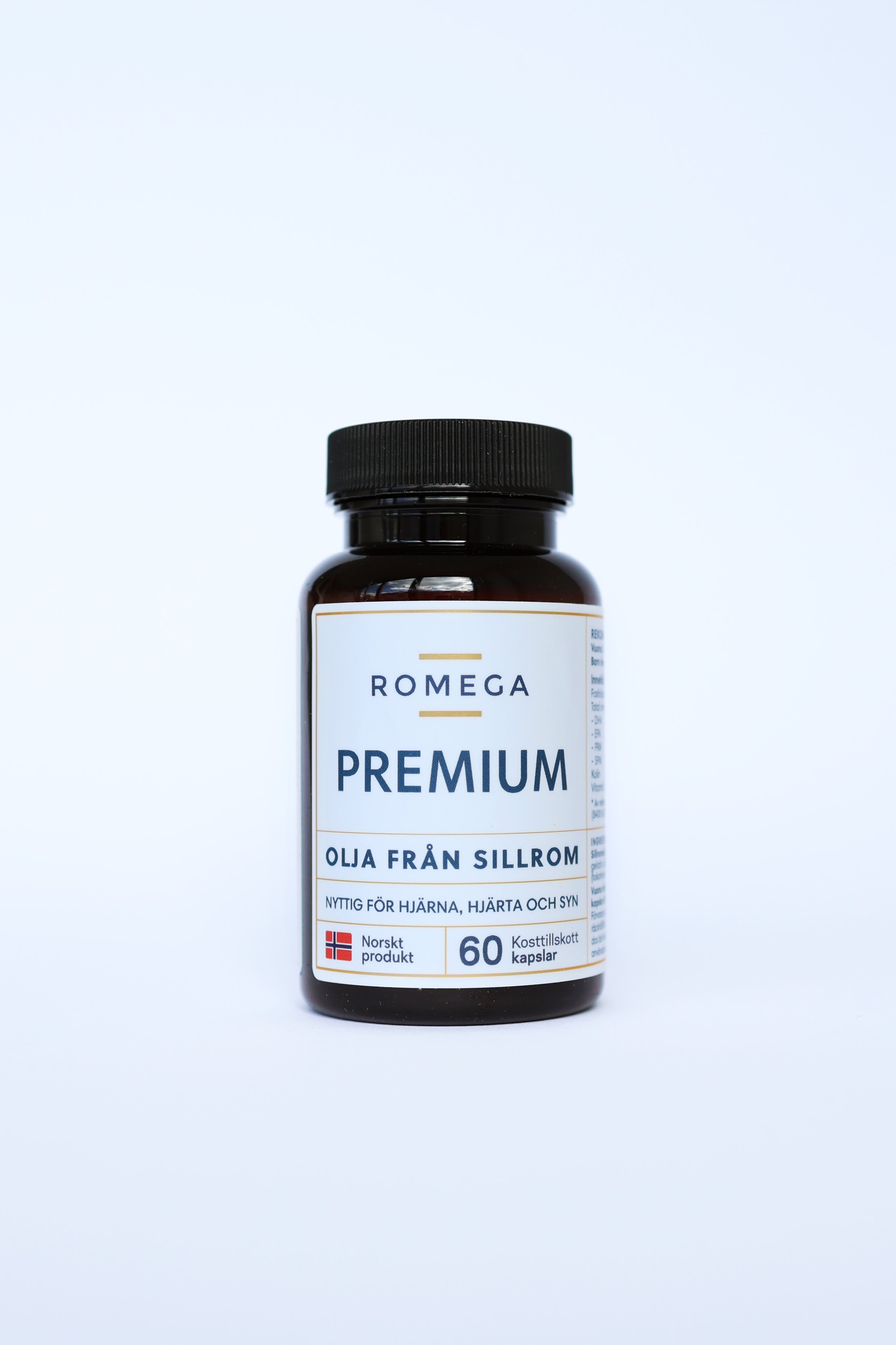
What do phospholipids have to do with Romega?
Romega is extracted from herring roe. Roe are egg cells, which are the largest cells in the body. A single roe grain is a large cell that has a phospholipid-rich cell membrane.
A large part of the fats in herring roe contain polyunsaturated marine omega-3 fatty acids. When we talk about marine omega-3 fatty acids, we usually talk about the fatty acids EPA and DHA in the form of triglycerides.
Romega contains DHA and EPA as phospholipids, which are the same natural form of fat found in all cell membranes in the body. EPA and DHA contribute to the function of the brain, heart and eyes. This is one of the reasons why Romega is a good product choice for those who want to take care of their brain, heart and vision.*
By using proprietary technology, we have enabled a gentle extraction of the fatty substances in the roe and have thus developed a dietary supplement rich in omega-3 phospholipids. This is what makes Romega special.
*) Beneficial effects for the brain and vision are achieved with a daily intake of 250 mg of DHA, and for the heart with a daily intake of 250 mg of DHA and EPA. Two capsules of Romega give you this.
-
Bianconi et al. (2013). An estimation of the number of cells in the human body. Annals of Human Biology , 6. 40: 463-471.
-
Cook et al. (2016). Bioavailability of Long Chain Omega-3 Polyunsaturated Fatty Acids from Phospholipid-Rich Herring Roe Oil in Men and Women with Mildly Elevated Triacylglycerols. Prostaglandins, Leukotrienes and Essential Fatty Acids