Docosahexaenoic acid , often abbreviated to DHA , is a long-chain omega-3
fatty acid found mainly in marine species.
DHA has been shown to be beneficial for brain health and is recommended
therefore as part of the diet.* But what exactly is DHA, and why is the omega-3 fatty acid so good for us humans?
DHA is an omega-3 fatty acid
Docosahexaenoic acid can be a difficult word to pronounce, and the fatty acid is called
therefore most often for DHA . Together with EPA (eicosapentaenoic acid) and
ALA (alpha-linolenic acid) and DHA are considered one of the most common omega-3 fatty acids.
What is the difference between DHA, EPA and ALA?
DHA, EPA, and ALA are all omega-3 fatty acids, but they have different structures
and are found in various raw materials. EPA and DHA are mainly found in seafood, while ALA comes from the plant kingdom. ALA is a shorter omega-3 fatty acid and is found in chia seeds, walnuts and soy, to name a few.
The fatty acids DHA and EPA
DHA and EPA are generally only found in seafood. Fish oil differs from most other fats in that it contains a lot of the long-chain omega-3 fatty acids DHA and EPA. These fatty acids are beneficial for health.*
DHA is good for your brain health
Both DHA and EPA are important for the heart, but it is DHA that is
most important for the brain. * The brain contains a lot of DHA but very little
EPA, and therefore it is the omega-3 fatty acid DHA that is particularly important for the brain.*
Brain cells contain a lot of DHA
The omega-3 fatty acid DHA is a building block of the brain. More than half of the brain is made up of fat – but not body fat as in adipose tissue. Around each cell is a thin layer of fat called a cell membrane. The membranes of brain cells contain particularly high amounts of DHA.
DHA is an important component of nerve cell membranes, and the majority of the polyunsaturated fat in the brain is DHA. Therefore, the brain needs more DHA than other organs.³⁴⁵⁶
How do you get enough DHA?
Since the body cannot produce DHA effectively, it must be obtained through
diet. If you get 250 mg of DHA daily, it can help maintain
normal brain function.
It is therefore wise to follow the authorities' advice to eat fatty fish to
Get DHA through your diet. You can do this by eating fish for dinner, especially fatty fish like salmon, mackerel or herring. Health authorities recommend eating fish for dinner at least two to three times a week.²
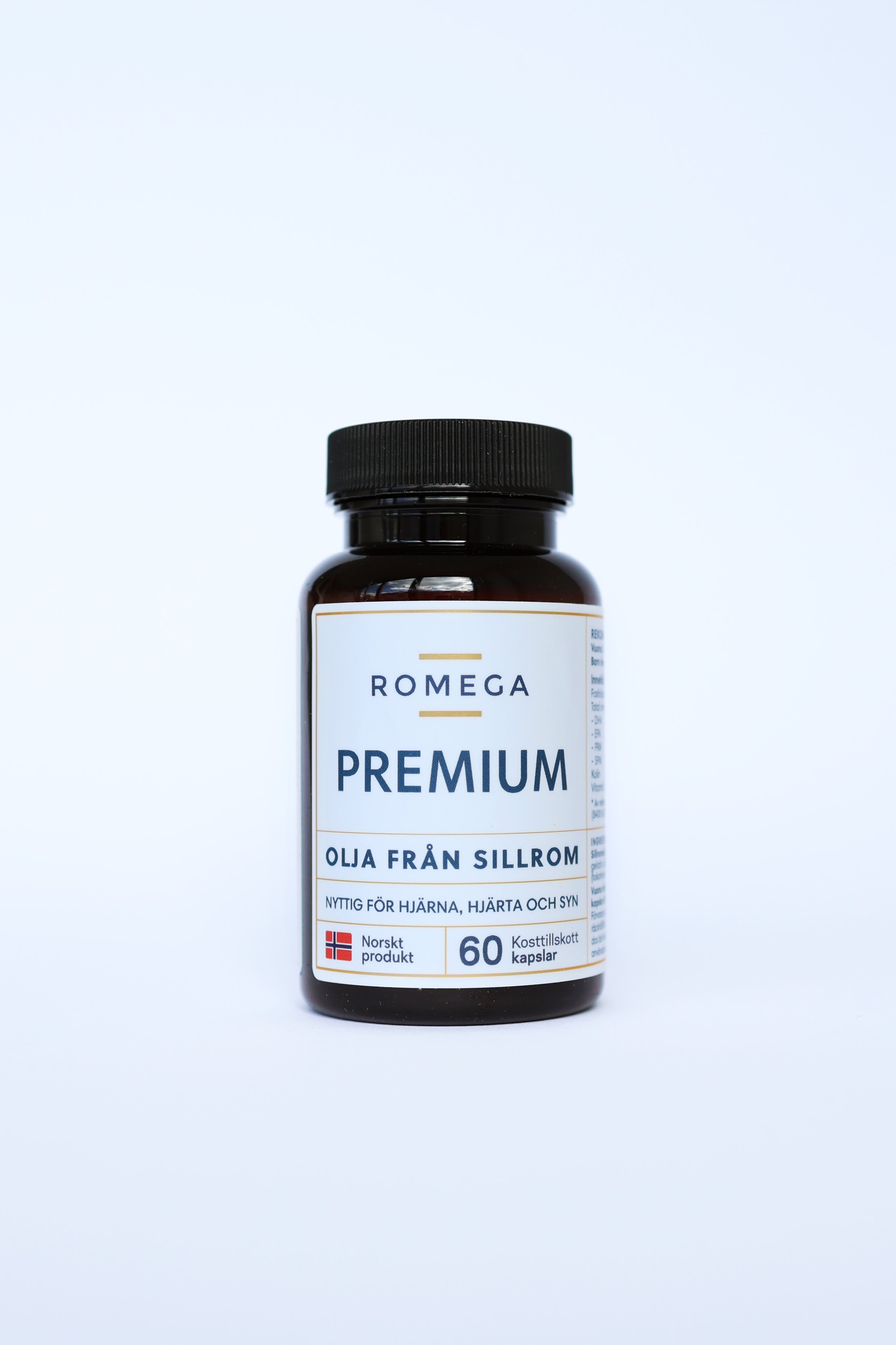
Romega® is a rich source of DHA
If you eat too little fish, it may be a good idea to take a DHA-rich omega-3 supplement.
supplement. Romega ® is a rich source of DHA and contains three times as much
DHA as EPA. Two capsules of Romega® provide 320 mg of DHA.
*) A daily intake of 250 mg DHA contributes to maintaining normal
brain function.
A daily intake of 250 mg of DHA and EPA contributes to maintaining normal
heart function.
References:
1. GOED (2021). What are omega-3's? Retrieved 18.05.21 from
https://alwaysomega3s.com/what
2. Directorate of Health (2014). Recommendations on diet, nutrition and
physical activity. Report IS-2170.
3. Britannica (2019). Adipose tissue. Encyclopedia Britannica.
4. Faiz, Kashif Waqar: Hjernen i Store medical lexikon at snl.no
5. Holck, Per: Nerve cell in Store medical encyclopedia at snl.no
6. Tanaka K, Farooqui AA, Siddiqi NJ, Alhomida AS, Ong WY. Effects
of docosahexaenoic acid on neurotransmission. Biomol Ther
(Seoul). 2012;20(2):152–157.