Good nutrition and intake of the right nutrients are important both for your own health and for your baby's development and growth - both during and after pregnancy...
A dietary supplement for pregnant and lactating women
The Norwegian Public Health Agency recommends maintaining good lifestyle habits during pregnancy and breastfeeding, where diet plays an important role. Good nutrition and intake of the right nutrients are important both for your own health and for your baby's development and growth - both during and after pregnancy.
In principle, you should get enough vitamins and minerals through a varied and healthy diet. However, it may be necessary to supplement your diet with supplements to meet the needs of certain nutrients.
DHA fats are important for your child's development and health.
As a pregnant woman, you should get enough omega-3s to ensure you meet both your and your baby's needs. The omega-3 fatty acid DHA is one of the key nutrients that health authorities recommend you include in your diet when you are pregnant.
Did you know that DHA contributes to the normal development of your child's brain?*
During pregnancy, it is especially important to have enough of the omega-3 fatty acid DHA, as the fetus then uses its mother's stores. During the latter part of pregnancy and the first years of life, our brains undergo enormous growth. DHA is especially important for brain development in infants.
The special fats in Romega are similar to the fats found in the brain, making Romega a good source for maintaining healthy brain health.**
*) The beneficial effect is achieved with a daily intake of 200 mg in addition to the recommended daily intake of omega-3 fatty acids for adults, i.e. 250 mg of DHA and EPA.
**) The beneficial effect is achieved with a daily intake of 250 mg of DHA.
Your baby's DHA levels during breastfeeding are often linked to the mother's intake
During the first years of life, our brains undergo enormous growth, and DHA is important for normal brain development in infants. During breastfeeding, the infant's intake of DHA is often related to the amount of DHA the mother consumes through her own diet.
Did you know that you should eat fish 2-3 times a week to meet the recommended requirement?
The Norwegian Public Health Agency recommends a daily intake of 200 milligrams of DHA for pregnant and breastfeeding women. The amount of DHA in the mother decreases during pregnancy and after childbirth, and it is therefore especially important to follow the Norwegian Public Health Agency's advice on DHA intake.
If you are unsure whether you are getting enough DHA through your diet, it may be helpful to take an omega-3 supplement.
Omega-3 – the starter kit for a new life
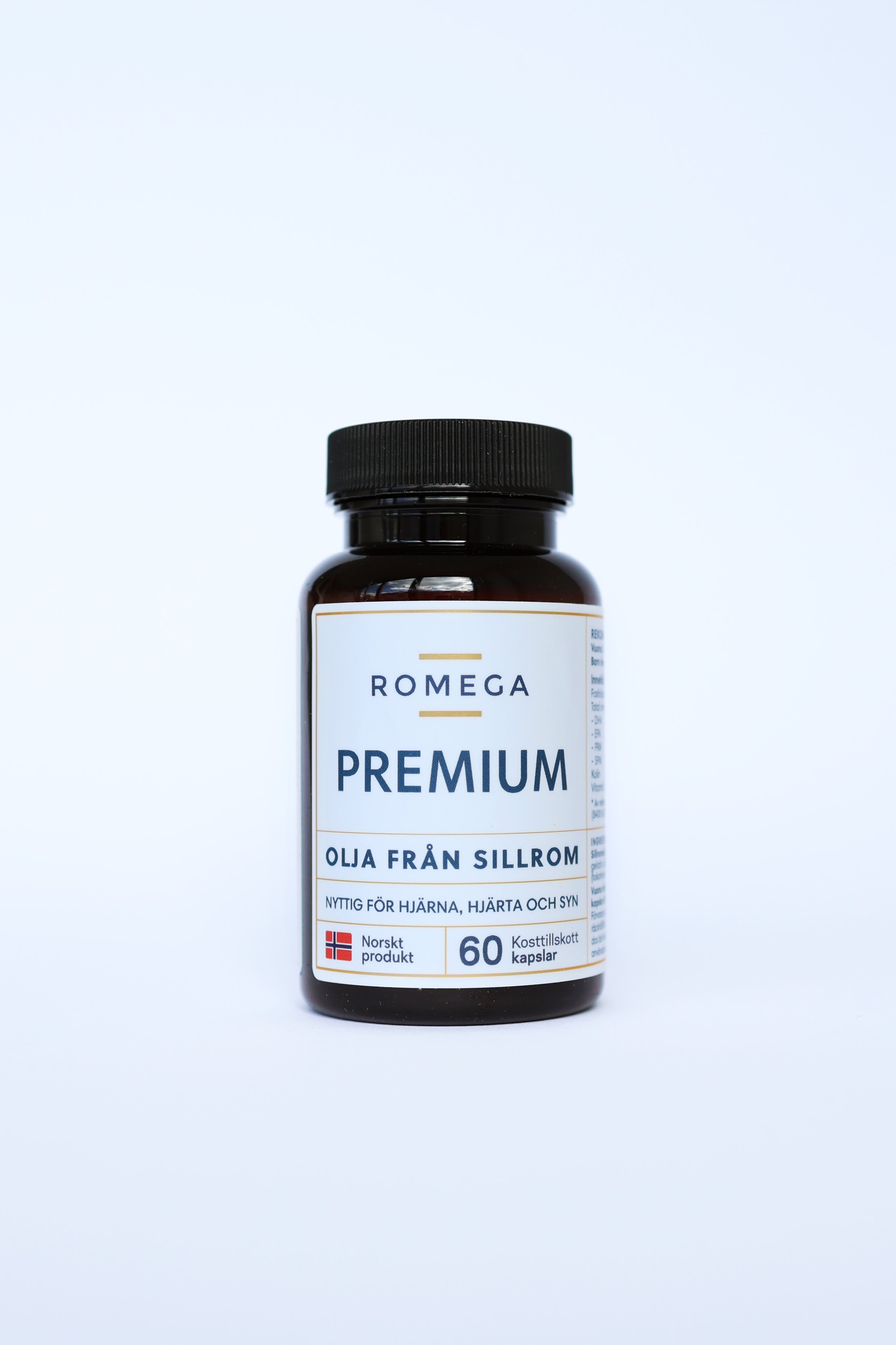
Did you know that Romega is extracted from herring roe, which has a high content of DHA?
We manufacture Romega from the roe oil of Norwegian spring-spawning herring. The roe oil has a high natural content of the omega-3 fatty acid DHA. The high DHA content makes Romega a good option for pregnant women who want to follow the Norwegian Public Health Agency's advice on omega-3 intake. Romega also contains the special type of fat phospholipids. Phospholipids are a type of fat that can be mixed with water, which can contribute to better absorption of omega-3 fatty acids in the body.
Two capsules of Romega contain 320 mg of DHA. By supplementing Romega with a normal diet both during and after pregnancy, you can be sure that you are meeting the recommended daily requirement of the important omega-3 fatty acids.*
-
The beneficial effect is achieved with a daily intake of DHA of 200 mg in addition to the recommended daily intake of omega-3 fatty acids for adults, i.e. 250 mg of DHA and EPA.
Sources:
-
The Norwegian Public Health Agency (2018a). Diet for pregnant women. The Norwegian Public Health Agency, Oslo. Retrieved 25.05.20.
-
The Norwegian Public Health Agency (2018b). Good living habits before and during pregnancy (brochure). The Norwegian Public Health Agency, Oslo.
-
The Norwegian Public Health Agency (2018c). Do I need to take dietary supplements? The Norwegian Public Health Agency, Oslo. Retrieved 25.05.20.
-
Braarund, HC et al. (2018). Maternal DHA Status during Pregnancy Has a Positive Impact on Infant Problem Solving; A Norwegian Prospective Observational Study. Nutrients, 10, 529.
-
Cook, MC et al. (2016). Bioavailability of long chain omega-3 polyunsaturated fatty acids from phospholipid-rich herring beet oil in men and women with mildly elevated triacylglycerols. PLEFA, vol. 11, P17-24.